5.08.2010

The Democratic Republic of Congo [DRC] has rarely known peace or harmony in their long history. According the Chris McGreal, the roots of war in eastern Congo were offset under the derelict rule of Mobutu Sese Seko. He renamed the country Zaire and through the 1970's and 80's the country was fractured into a series of city states increasingly distant from one another. Everything was in decline; justice systems, hospitals, postal service had ceased, and border countries became nothing more than economic appendages for other countries. Then came the Rwandans and a decade of war, mass deaths, and in some parts the total destruction of what remained as functioning government. After the Rwandan president was assassinated in April 1994, things only got worse. A Hutu extremist regime seized power and began the murder of over 800, 000 Tutsis, but a Tutsi group ran them out shifting the change in power causing more than a million Hutus to flee to Zaire, fearing revenge. As Rwanda and the DRC struggled with the rebel Hutu and Tutsi factions, Rwanda seemed to have the upper hand and they were able to install Laurent Kabila as president. War still raged all across the country with no visible front lines. Rebel groups would invade towns as they came across them, looting, raping and killing as they went.
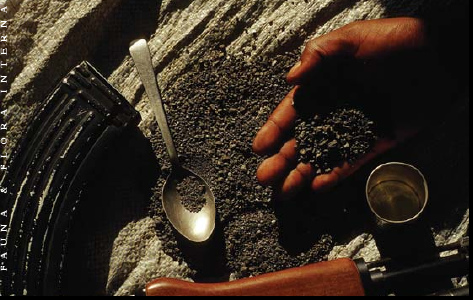
Meanwhile foreign armies were running lucrative sideline operations into eastern Congo's diamond, gold and coltan, a dull metallic ore used to produce elements used in cellphones, blackberries, iPods, laptops, and almost every other commonly used electronic gadget. A peace agreement in  2002 caused foreign armies to withdraw, although mining still continued under the cooperation of the Rwandan government. A new Hutu extremist group, Democratic Forces for the Liberation of Rwanda (FDLR) still wanted to "liberate" Rwanda by overcoming the current power.

To put it simply, The situation in the DRC is a tangled web of rebels, terror, death, plays for power, foreign interests, and endless mining. And that's just a short list.

Canada's involvement in the preliminary stages seemed to be getting underway, but  a recent article states that the post Afghanistan military might not be heading into the Congo at all. The UN has asked that a Canadian commander, Lieutenant-General Andrew Leslie lead a peace keeping mission in the African nation. The debate in Ottawa is whether he will go in with at most 50 other troops. That is if he goes at all. The Canadian government seems a bit wary, wouldn't you say? Their concerns are over costs and the potential that Canadian responsibility for a large and difficult mission will creep into something bigger. Canada had left behind peace-keeping operations in the mid 1990's, and don't seem keen to rejoin. Canada has however sent money and other aid, but no solid word yet on their contribution of troops.

I would say that Canada's foreign policy barely even remembers the human security agenda. The minds behind the latest thoughts about who to send, what to send, and how many to send to the DRC are spewing out cowardly nonsense. If Canada still felt any of the human security agenda's influence they would not be dancing around the issue. They're talking about their own interests and whether or not they can afford the risk of Canada's involvement becoming any bigger. I understand that stretching one's resources is in no way a good thing, but assisting in any way to the untangling of the complex mess that is the DRC right now, is no doubt something that Canada should be interested in helping with.

Harper's G8 goals are in no way helpful either. Already spreading Canada quite thin, and now during a visit to the DRC, Gov. Gen. Michaelle Jean headed straight to a meeting with the UN special adviser to discuss the main focus of her trip: Violence against women. I'm assuming that encompasses pregnant women too. And their children as well. It's all a little too connected for my liking. It is obviously in accordance with Harper's goal to aid Maternal health, and while that is all fine and good, I have to say, "Come oooon." You fly straight into the heart of what is referred to as Africa's World War, and you decide to focus on violence against women? I get it. Rape is so widespread in the area, and so brutal that victims have died from blood loss form the wounds, so again, I get it. But I wonder what the action plan would be for a crackdown on Rape in the DRC? Harsher punishment for rebels found to have raped women? Banning rape during town looting? The brutality is coming from literally every side of this multi-edged conundrum, and while the violence towards women is extremely out of control, SO IS THE REST OF THE PLACE! You can't expect to end violence against women without first ending the random looting of cities, which will only end once the rebel groups are found and stopped, which will only happen if several "sides" of the conflict can come together to end the turmoil and hatred that has been brewing for generations. And let's face it.. could there be a more complicated objective?

The view from the north is bleak today.

Please respond: Has mankind created so much conflict with one another that in some cases it has become irreversible?
Can the DRC ever know peace? Do you see hope for the people?

Sources:
Coltan and the Congo by Gordon Setter
 For more news:
http://www.guardian.co.uk/world/congo
For videos and other media:
Medecins sans frontieres

Human Security Agenda & Responsibility to Protect

"Human security insists that we focus on the safety of ordinary people rather than on the security of the state."

The main idea behind Canadian Foreign Policy  in the 1990's was the human security agenda backed by Canada's minister of foreign affairs, Lloyd Axworthy. I believe, the concept of the human security agenda is, in theory, a good one. In fact it vaguely resembles another concept that I am very fond of called cosmopolitanism. The security of the people over the security of the state is an idea waiting to be realized. Of course that's not to say the security of the state is unimportant. The integrity of a nation is very important, and yet wouldn't you say that a nation can only be what it is because of the people? After all what is Canada without it's people and it's cultural values? So I think it's wise that security of the people would push security of the state to a close second on the list of interests.

When I say interests it brings to mind the juxtaposition of interests and values in relation to a country's foreign policies. Choosing between a countries interests within or between other countries, in comparison to their morals and values about the issue at hand. This article that I'm responding to deals with the Human Security Agenda and Canada's Response to the crisis in East Timor in the late 1990's. It outlines Canada's support for the Human Security agenda and then examines Canada's foreign policy as it responded to the Timor Crisis. The article also brings to light the juxtaposition of Canada's words and their actions at the time.

The Human Security agenda would fall under the category of values in the Realism v. Idealism discussion. When aid was called for in East Timor the Canadian government found itself having to decide between Moral Politik and Real Politik. "... a hard calculation of interests led to the conclusion that there were in fact no Canadian interests that warranted more than a token and symbolic contribution to the efforts to end the threat for the safety of East Timorese." If Canada had really been behind their support of the Human Security Agenda, that could not have been their conclusion. Clearly Canada was not ready for such grand ideals.

The concept of the Human Security agenda is still a very good one, although it definitely needs some fine tuning. It's a very sweeping and open ended concept that attempts to encompass all problems which always begs the question, "what do we do first?" Given the experience of East Timor, the human security agenda does not seem to be a viable foundation for Canadian foreign policy, but given the right attention and it could be refined and made better so that one day maybe it could become a viable foundation. The right principles are there, but as for execution Canada fell short. But we can only learn from our mistakes. We shouldn't just chuck the agenda out the window because we failed to put it into practice.

General sweeping statement of the day: We can only learn from the mistakes of the past.

And that would be the view from the north.

5.02.2010

Is Harper for REAL?

Ah, Harper. The image I have of him in my mind always puts a smile on my face. It's his face, you know. The same face he wears in every photo op that speaks volumes. The face that says, "I really could not care less, but I'm the Prime Minister so does this look happy enough?" It's a face I don't trust. A face full of the false promise of care. Much like his ideas for the G8. 
I'm an idealist, or in a realist's opinion, an idiot. So when I say that Harper's top priority of aiding maternal health and ending maternal mortality is a wonderful idea, I mean it, but of course I'm not stupidly going to follow behind the man with my love and adoration blinders on. Idealists are not idiots, they just have ideals and hopes for the world.    ...and clearly I get a little worked up when my ideals are challenged. Whoops. 

As for Harper, the idiot - I mean 'idealist', his priorities for the G8 are all well and good. In fact his warning that "the focus should be on keeping past promises, not making new commitments." is something I can even get on board with. Too often, governments and politicians make promises and ploys to help the less fortunate that are quickly forgotten when more recent issues crop up. With the way the world works these days it's really no surprise of course. Everything is fast-paced and quick, and the masses have trouble focusing on one thing for more than 30 seconds, but sticking to global goals is a good thing. And overall, working towards lowering maternal mortality rates in mothers and newborns is a very worthy goal. Giving funding to the proper teaching of midwives, and to resources for mothers immediately before and after the birth should prove to be effective in third world countries as well as developed countries, because maternal health is a truly global concern.

So yes, it would seem that Harper's 'ideals' are sweet, and nice, and he's a wonderful man who cares about the well being of all the woman and <<< little babies all over the world.  [Insert 'aww' here] But as many hardcore realists would tell you: (those same realists who would call me an idiot) 
"OF COURSE HE DOESN'T REALLY CARE!"

This year, it is Canada's turn to hold the presidency and host the meetings of the world's large economists, despite not actually making it into the top 8 list itself. Harper does not want to be making any mistakes at this point. These meetings are crucial for him to show the forward thinking and power that is his government in Canada. He's proposed the priorities, but he's also called upon the credibility of other countries and their past promises that are unfulfilled, tactfully avoiding his own. He's also proposed that Canada will be in Haiti for the next ten years, helping to rebuild. Harper understands that the masses need to know problems are being dealt with and fixed by 'the big guys' at the top. So he piles on crises, and sloughs off the incredible importance of maternal health to the G8, helping in Haiti, and addressing the past promises of the world.

Whoo! That's quite a lot of stuff. How can he expect to get it all done? The truth has to be that he doesn't. Making a long list will certainly give everyone lots to think about for a while, and put the focus on Harper who has just been so clever to point out these previously overlooked problems. I guess I'll be waiting with bated breath for the actions that will be tied to these 'new' promises.  It's a whole lot of talk that seems to have come out of nowhere. And of course, being an idealist I don't like that Harper seems to be uninvolved behind those cold, heartless eyes, but oh realism! You've got me once again. Politics and emotions can't mix! No! Of course Harper can't actually feel empathy for the thousands of still-born babies, or the struggling mothers who won't see their babies live past their fifth birthdays. He's a politician. True idealism would be a refreshing glass of cold water for this world.

That's the view from the north. (Though I must say, it is HOT up here today!)

Disclaimer: Mild sarcasm was used, so please take it as sarcasm and 'don't be cruel.' -Elvis

Sources:
http://www.cbc.ca/politics/insidepolitics/2010/01/pm-looks-to-set-tone-in-davos-economic-forum.html
http://www.theglobeandmail.com/news/politics/ottawa-notebook/stephen-harper-wants-g8-to-honour-past-promises-not-make-new-ones/article1447278/
http://www.theglobeandmail.com/news/politics/harpers-aid-spending-under-the-microscope/article1445333/

4.28.2010

Re: Michael Ignatieff: Idealism and the Challenge of the "Lesser Evil"

My opinion of Michael Ignatieff was previously fuelled by ad campaigns from the elections, and those all too memorable commercials that asked, "Where in the World is Michael Ignatieff?" pointing out how he rarely spent time in his own country. The ad even had him expressing how much the United States had become a home for him. Based on this 'evidence' coupled with my sometimes over-zealous love of Canada, it seemed perfectly clear to me that Ignatieff was not someone I would waste any time on. Just another politician. But like all things that are half-a**ed once I'd taken the time to actually look into it, I found many of his political ideals to be very similar to my own.

The concept of cosmopolitanism, (the idea that humans have obligations that stretch far beyond the boundaries of their own country to the edges of the world) is an ideal that I've always been passionate about and as backwards as the term sounds, I believe liberal interventionism is the only way to achieve important global goals under the world's bleak circumstances. In today's world talking of peace and of the iradication of nuclear weapons is all well and good, but it will achieve little headway. The modern day terrorist will not be won over with words, and possibly not won over at all. Unfortunately, force is the best option to secure the freedoms of the people.

This article also addresses Ignatieff's long absences from Canadian soil, a point which I was still a bit wooly about. But knowing the ways of other countries proved to be very beneficial for Ignatieff and offers an insight into the strength of Ignatieff's cosmopolitan beliefs. "Ignatieff ... witnessed some of these horrors as a journalist in Sarajevo and Kurdistan, and he notes that his cosmopolitanism arises in part from this firsthand encounter with barbarism and inhumanity." It can be difficult to see the commonalities between other cultures but by living amongst them and facing their hardships the cultural lines can become blurred. Suddenly cosmopolitanism makes alot more sense, and Ignatieff understands the importance of that unification.

Overall, I must say that I agree with Ignatieff's beliefs and practices, despite my underlying mistrust of politicians in general, and now that I am of age, I'd be confident in voting for him. When the time comes.

And that's the view from the north.

Let me know if you agreed with Ignatieff or with me. Let me know if you didn't.

 The article: "Michael Ignatieff: Idealism and the Challenge of the Lesser Evil" by Michael Cotey Morgan can be found at this web address.
http://www.jstor.org/pss/40204227

1.26.2010

The Trial of Robert Semrau

A Canadian soldier faced a court martial on Monday (January 25), after being accused of the murder of a wounded, unarmed Taliban fighter in sounther Afghanistan. Capt. Robert Semrau was charged with second degree murder in the battlefield killing.
A joint “synopsis” of the Afghan incident, filed in court last year, states Semrau was mentoring an Afghan National Army unit under British command when they were ambushed in the Nad Ali district. A U.S. Apache helicopter was called in and sprayed the area with cannon fire. When the Afghans and Canadians swept the district afterwards they discovered one dead insurgent and another with wounds “too severe for any type of treatment” in the field. The document goes on to say that an assault rifle was taken from the wounded man before Semrau was allegedly seen firing his rifle at him. Two shots were heard. The battalion moved on and the dead body was never recovered.

In past wars and conflicts ther have been other incidents of battlefield executions including several well-known cases in Korea, and a number of stories concerning German prisoners being killed in retaliation for the murders of Canadian troops by the SS in the aftermath of D-Day. None have led to murder charges before.

A group on facebook has been created for Capt Semrau, that believes the soldier is merely a scapegoat.
“Capt. Robert Semrau, a comrade and a friend, is being wrongfully charged with the death of a presumed Afghani insurgent during a fire fight with Taliban forces,” wrote the page creator Stuart McMahon. “In a land of misery, fear and an unknown enemy our men and women fight for our freedom. We cannot begin to understand the stress our troops undergo everyday in Afghanistan. I have been honoured to have known Capt. Robert Semrau. During my time spent in the Canadian Armed Forces I have worked alongside Robert and was graced with his companionship, understanding and leadership that he sufficiently gave to every soldier under his command.”

Other arguments that can be made for Capt. Semrau would be that the Afghan insurgent was suffering and Semrau was only putting him out of his misery. Nevertheless Canadian and international law does not recognize mercy killings and it's unlikely that it would stand up as a defence.


Personally the article makes me feel a little sick. I understand that war is necessary though many wish that wasn't the case, but I think it is also imperative that unnecessary deaths be avoided at all costs. A soldier needs to think rationally at all times, and not let emotions interfere. Wars are not an individual class matter. They are not fought for revenge of so-and-so's death or to gain the pride of one person. They were once a largely domestic matter, and now are largely systemic. Conflicts are over laws, values and moral issues. Fighting is done in order to protect those who cannot protect themselves. I believe that Capt. Semrau brought his emotions into the matter, and should not have.Whether it was to perform a mercy killing, or simply to rid the world of another enemy, the reason is irrelevant. There is no justifiable reason that could make the insurgents death necessary. He was unarmed, and wounded. He posed no threat to Capt. Semrau.

And that's the view from the north.


Do you agree with the scores of facebook members that stand behind him? Or do you believe he should be found guilty of second degree murder?

I'll try to post the results of the court martial when and if they are made public.


To read the article:
Cdn Soldier Accused of Battlefield Execution

10.13.2009

Armenia v. Turkey

In 1915, the ruling political party of Turkey, the Committee of Union and Progress (CUP) made the decision to carry out a genocide on the Armenian people. For three years, the Armenians were subject to deportation, torture, massacre and starvation. Women and children were abducted and horribly abused. After a brief respite from these horrors at the end of World War I, the Armenians were hit again with massacre and expulsions until 1923. There were about 2 million Armenians living in the Ottoman Empire at the time, and it is estimated that 1.5 million perished in the Armenian genocide. The events that took place from 1915 to 1923 were condemned by the international community as crimes against humanity. Countries like France, Argentina, Greece and Russia, where the survivors and their descendants now reside, have officially recognized the Armenian genocide. The present day Republic of Turkey, however, adamantly denies that a genocide was committed. The Turkish government dismisses evidence as mere allegations and frequently obstructs knowledge of evidence, and therefore, the affirmation of the truth has become a matter of international significance.


Recently Armenia and Turkey have "buried the hatchet" or their governments have, anyway. Both countries have signed a landmark agreement to establish diplomatic relations and open their border after sixteen years of discord. Of course the big problem in all of this: the proud Republic of Turkey can't own up to their embarrassing past. For years the Armenian people simply wanted recognition that the brutal murders of 1.5 million people in the final days of the Ottoman Empire amounted to genocide. A quick, sincere, simple statement. An agreement to rectify the conflicts of the past, and move forward to better relations. But Turkey stubbornly refused until poor landlocked Armenia was pressured "into accepting these humiliating, one-sided protocols [proving] sadly, that genocide pays," as Ken Hachikian, chairman of the Armenian National Committee of America so boldly describes it. 


Many countries were eager to see an end to this rivalry, including the US, and the not so newly appointed President, Barack Obama. In one article pertaining to the signing of the agreement, it is stressed that Secretary of State Hilary Rodham Clinton had flown all the way to Switzerland as a simple witness to the signing and not to help close the deal.  As it turns she found the time to help work out a few "last-minute snags" in the Armenian and Turkish Agreement. 


The agreement between Armenia and Turkey calls for a panel to discuss "the historical dimension" of the killings of Armenians during the First World War. 


So who is going to be on this panel? I can see it now, like a scene straight out of the movie Runaway Jury. Chances are not a single one of them will be from the countries actually involved. Maybe that's best, but why is it that countries aren't even allowed to make their own decisions anymore? Yes the rest of the world should have an opinion in what goes on, but when other countries meddle, there is sure to be some group, extremist or otherwise, that believe people should mind their own country's affairs.  And the very proof of this fact is hiding somewhere along the border of Afghanistan and Pakistan. 


So Armenians are upset by this new agreement with an old enemy, and Turkey might never man up and admit that even they make mistakes. But at least their governments can sign a paper and open their border again. Now money can flow through the countries once more, keeping the world turning as only money can. 


And that's the view from the north.


For further info on the Armenian Genocide:
Visit the Armenian National Institute website