

 The Democratic Republic of Congo [DRC] has rarely known peace or harmony in their long history. According the Chris McGreal, the roots of war in eastern Congo were offset under the derelict rule of Mobutu Sese Seko. He renamed the country Zaire and through the 1970's and 80's the country was fractured into a series of city states increasingly distant from one another. Everything was in decline; justice systems, hospitals, postal service had ceased, and border countries became nothing more than economic appendages for other countries. Then came the Rwandans and a decade of war, mass deaths, and in some parts the total destruction of what remained as functioning government. After the Rwandan president was assassinated in April 1994, things only got worse. A Hutu extremist regime seized power and began the murder of over 800, 000 Tutsis, but a Tutsi group ran them out shifting the change in power causing more than a million Hutus to flee to Zaire, fearing revenge. As Rwanda and the DRC struggled with the rebel Hutu and Tutsi factions, Rwanda seemed to have the upper hand and they were able to install Laurent Kabila as president. War still raged all across the country with no visible front lines. Rebel groups would invade towns as they came across them, looting, raping and killing as they went.
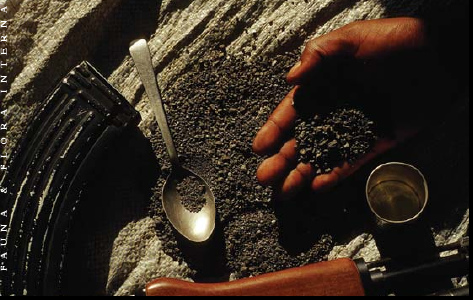 Meanwhile foreign armies were running lucrative sideline operations into eastern Congo's diamond, gold and coltan, a dull metallic ore used to produce elements used in cellphones, blackberries, iPods, laptops, and almost every other commonly used electronic gadget. A peace agreement in 2002 caused foreign armies to withdraw, although mining still continued under the cooperation of the Rwandan government. A new Hutu extremist group, Democratic Forces for the Liberation of Rwanda (FDLR) still wanted to "liberate" Rwanda by overcoming the current power.
To put it simply, The situation in the DRC is a tangled web of rebels, terror, death, plays for power, foreign interests, and endless mining. And that's just a short list.
Canada's involvement in the preliminary stages seemed to be getting underway, but a recent article states that the post Afghanistan military might not be heading into the Congo at all. The UN has asked that a Canadian commander, Lieutenant-General Andrew Leslie lead a peace keeping mission in the African nation. The debate in Ottawa is whether he will go in with at most 50 other troops. That is if he goes at all. The Canadian government seems a bit wary, wouldn't you say? Their concerns are over costs and the potential that Canadian responsibility for a large and difficult mission will creep into something bigger. Canada had left behind peace-keeping operations in the mid 1990's, and don't seem keen to rejoin. Canada has however sent money and other aid, but no solid word yet on their contribution of troops.
 I would say that Canada's foreign policy barely even remembers the human security agenda. The minds behind the latest thoughts about who to send, what to send, and how many to send to the DRC are spewing out cowardly nonsense. If Canada still felt any of the human security agenda's influence they would not be dancing around the issue. They're talking about their own interests and whether or not they can afford the risk of Canada's involvement becoming any bigger. I understand that stretching one's resources is in no way a good thing, but assisting in any way to the untangling of the complex mess that is the DRC right now, is no doubt something that Canada should be interested in helping with.
Harper's G8 goals are in no way helpful either. Already spreading Canada quite thin, and now during a visit to the DRC, Gov. Gen. Michaelle Jean headed straight to a meeting with the UN special adviser to discuss the main focus of her trip: Violence against women. I'm assuming that encompasses pregnant women too. And their children as well. It's all a little too connected for my liking. It is obviously in accordance with Harper's goal to aid Maternal health, and while that is all fine and good, I have to say, "Come oooon." You fly straight into the heart of what is referred to as Africa's World War, and you decide to focus on violence against women? I get it. Rape is so widespread in the area, and so brutal that victims have died from blood loss form the wounds, so again, I get it. But I wonder what the action plan would be for a crackdown on Rape in the DRC? Harsher punishment for rebels found to have raped women? Banning rape during town looting? The brutality is coming from literally every side of this multi-edged conundrum, and while the violence towards women is extremely out of control, SO IS THE REST OF THE PLACE! You can't expect to end violence against women without first ending the random looting of cities, which will only end once the rebel groups are found and stopped, which will only happen if several "sides" of the conflict can come together to end the turmoil and hatred that has been brewing for generations. And let's face it.. could there be a more complicated objective?
The view from the north is bleak today.
Please respond: Has mankind created so much conflict with one another that in some cases it has become irreversible?
Can the DRC ever know peace? Do you see hope for the people?
Sources:
Coltan and the Congo by Gordon Setter
For more news:
http://www.guardian.co.uk/world/congo
For videos and other media:
Medecins sans frontieres


